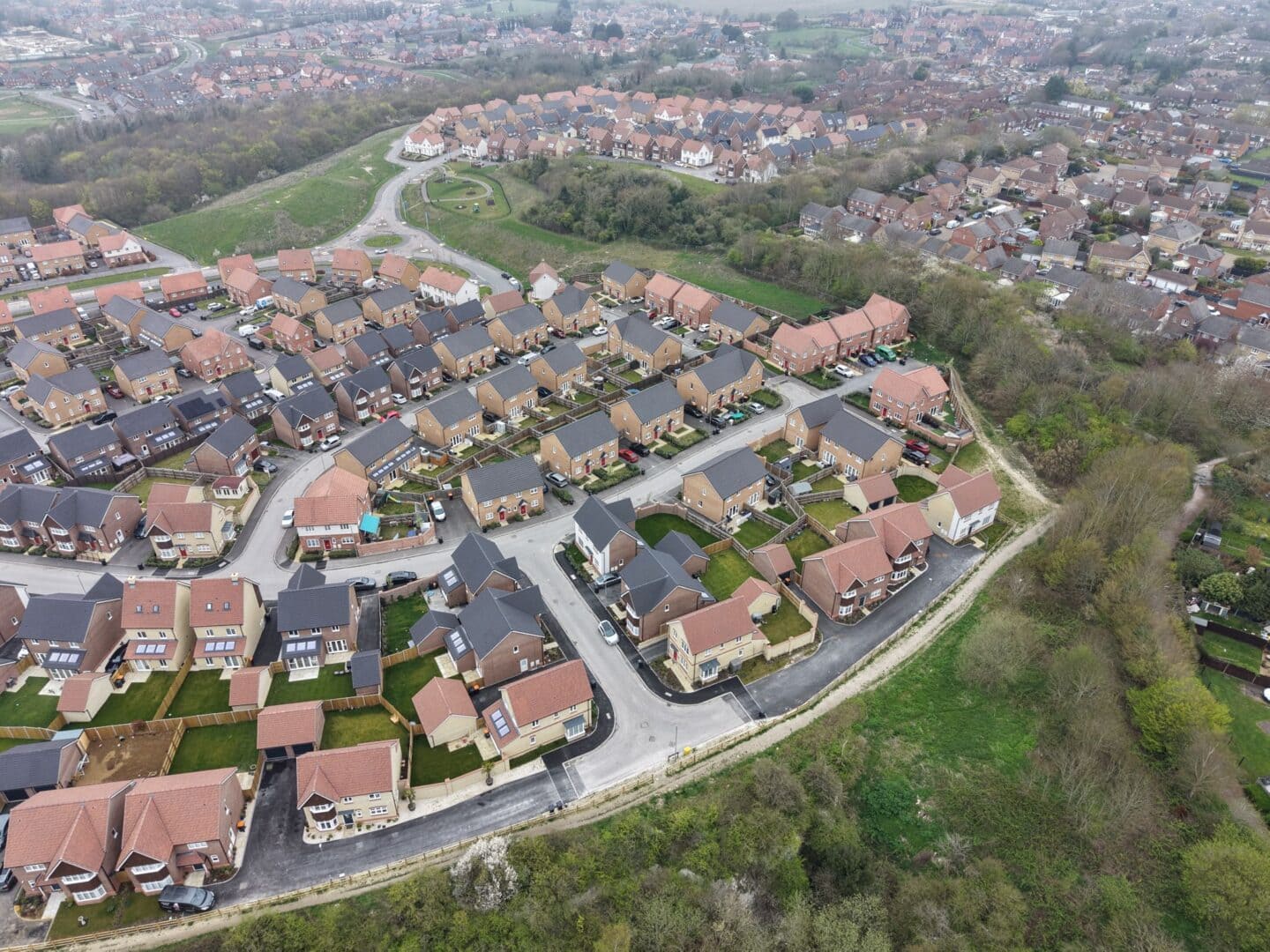
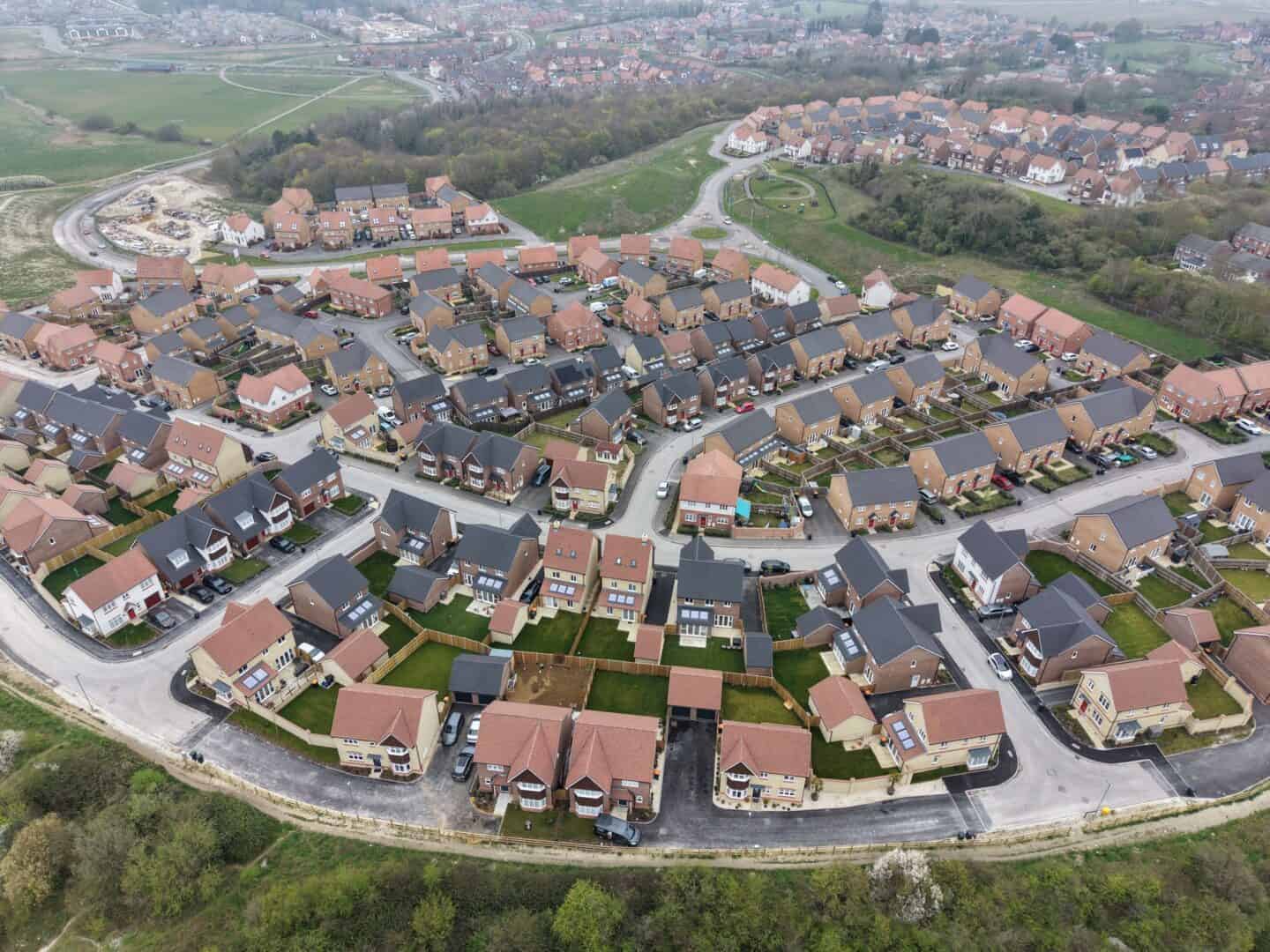
A large residential development is rarely a single construction event. Most schemes of any significant scale are delivered in phases — plots released in tranches, infrastructure completed in stages, and the overall programme managed across a timeline that can span several years. For the roofing package, that phased structure creates specific operational demands that a roofing contractor without experience of multi-phase residential work will struggle to meet consistently.
Globe Roofing works predominantly on large new build residential developments and social housing regeneration schemes — the two sectors where phased delivery is the norm rather than the exception. Managing the roofing programme across multiple phases, maintaining consistent standards from phase one through to the final plots, and keeping the roofing package aligned with the overall development programme is central to how Globe Roofing operates.
Planning the Roofing Programme Around the Development Timeline
The starting point for managing a multi-phase roofing programme is understanding the developer’s overall development timeline — not just the immediate phase, but the full scheme. When does each phase mobilise? What are the plot release dates for each phase? What are the handover milestones that determine when NHBC inspections need to take place?
Globe Roofing works with developers and principal contractors at the outset to align the roofing programme with those milestones. Plot-based pricing is agreed across the full development, not just the immediate phase, giving the developer cost certainty from the start and removing the need to renegotiate commercial terms for each subsequent phase. Resource allocation — the number of gangs required for each phase, the mobilisation lead time, the expected duration per plot — is planned against the development timeline so that the roofing package doesn’t become a constraint on the programme.
Maintaining Standards Across Phases
One of the most significant risks on a multi-phase development is standard drift — the gradual divergence between the quality of workmanship and documentation on the early phases and what’s delivered on the later ones. It happens when subcontractors treat each phase as a separate job rather than part of a continuous programme, when gang composition changes between phases without proper briefing, or when the pressure of maintaining pace across multiple active plots leads to shortcuts that aren’t immediately visible.
Globe Roofing’s approach to standard maintenance on multi-phase developments is grounded in consistent specification. The felt and batten specification, fixing schedule, ventilation provision, and cold bridging details agreed for phase one apply across every subsequent phase. NHBC compliance at mid-build inspection stages is built into the roofing programme from the outset, not treated as an additional requirement to be addressed when an inspector is due on site. Plot completion records are maintained consistently across every phase, giving the developer an unbroken documentation trail from the first plot to the last.
Coordinating With Scaffold Across a Phased Programme
On a multi-phase development where Globe Cambridge is providing the scaffold package, the coordination between scaffold and roofing is managed across the full development programme rather than phase by phase. The scaffold configuration for each phase is planned with the roofing programme in mind — lift heights, access points, and platform arrangements agreed between the two divisions before erection begins on each phase.
This means that when Globe Roofing’s gangs mobilise on a new phase, the scaffold is already configured for how they work. There’s no time lost to reconfiguration, no safety risk from gangs adapting their working method to a scaffold that wasn’t designed for them, and no delay to the principal contractor’s programme while two unrelated subcontractors negotiate a solution.
Continuity of Personnel and Knowledge
A roofing subcontractor who changes their site management team between phases loses the site knowledge that the earlier phases built up — the specific access arrangements, the developer’s particular preferences, the quirks of the plot layout that affect how each roof is approached. Globe Roofing maintains continuity of site management and gang composition across phases wherever the programme allows, so the knowledge accumulated on earlier phases is carried forward rather than lost.
For developers running schemes with Vistry, Barratt Homes, Persimmon, Taylor Wimpey, and Bellway, that continuity across phases is part of what makes the relationship with Globe Roofing productive over the long term. The roofing package doesn’t have to be rebuilt from scratch for each phase — the standards, the commercial terms, and the working relationships are already in place.
To discuss roofing programme management across your next multi-phase development, contact Globe Roofing today.