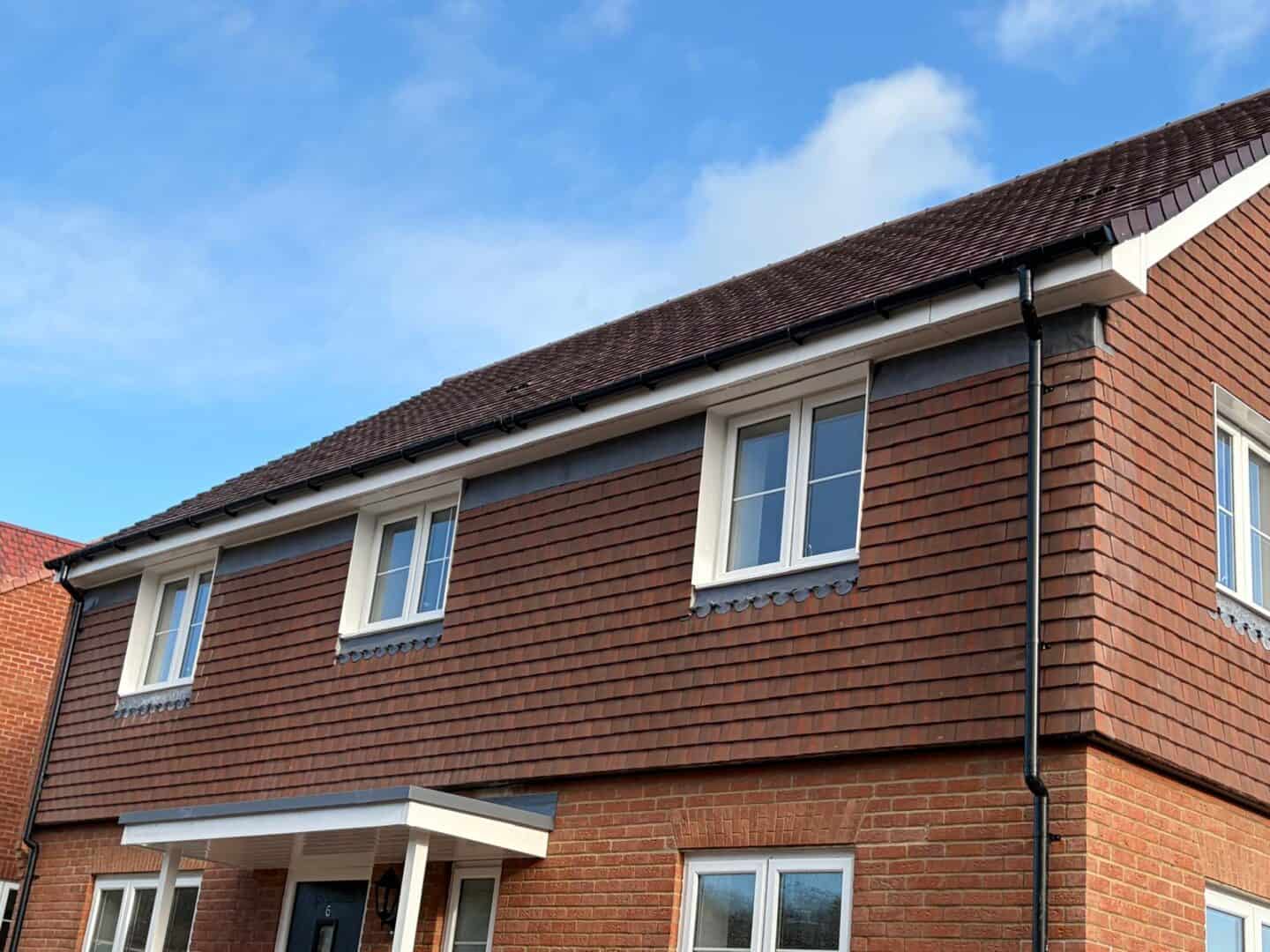
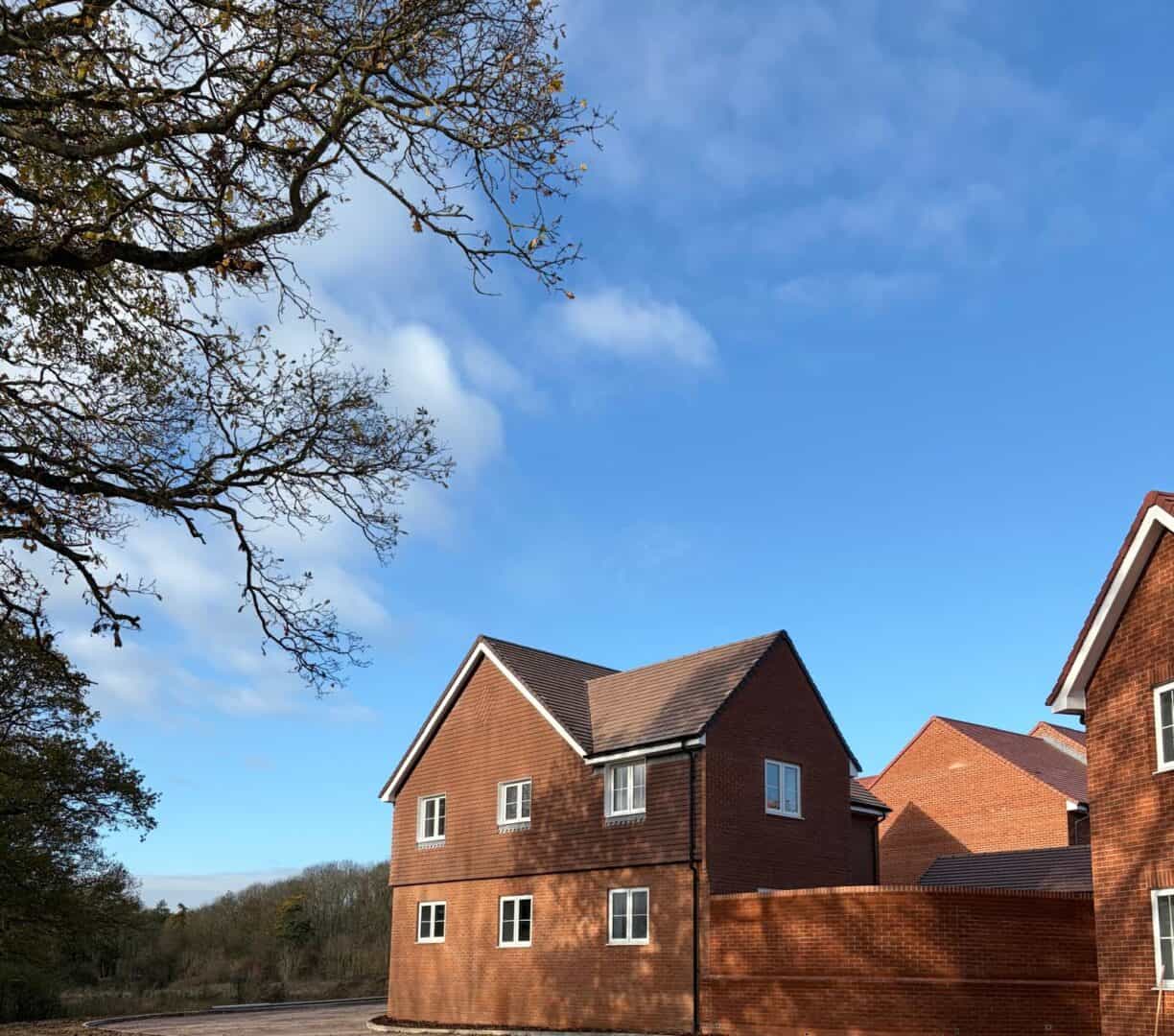
Ventilation is one of the most consistently misunderstood elements of new build roofing — and one of the most frequently cited reasons for failed NHBC inspections on residential developments. It doesn’t fail inspection because it’s technically complex. It fails inspection because it’s treated as a secondary consideration rather than a fundamental part of the roof construction, and because the consequences of getting it wrong aren’t immediately visible in the way that a poorly fixed tile or an incorrectly laid felt course would be.
For developers and QSs, understanding what correct roof ventilation looks like — and why NHBC inspectors check it — is useful context for evaluating whether the roofing contractor on a development is approaching the package correctly.
Why Roof Ventilation Matters
A pitched roof assembly on a new build residential property consists of multiple layers — the tile or slate covering, the underlay, the batten and counter-batten arrangement, the insulation, and the ceiling below. The way those layers are configured determines whether moisture vapour produced inside the property can escape, or whether it accumulates within the roof structure.
When moisture vapour accumulates in the roof void, the consequences develop slowly and become visible only after the property has been occupied for some time. Timber rot in rafters and wall plates. Mould growth in the roof void. Insulation that becomes saturated and loses its thermal performance. These are exactly the kind of latent defects that NHBC warranty claims are made against — and they’re entirely preventable with correct ventilation provision from the outset.
The thermal performance dimension is equally important. New build properties are built to increasingly stringent energy efficiency standards, and the roof assembly is a critical element of the building’s overall thermal envelope. Ventilation that isn’t correctly integrated with the insulation specification can create pathways for heat loss — cold bridging — that undermine the property’s as-built energy performance and create the conditions for condensation at the cold surfaces within the roof structure.
What NHBC Technical Standards Require
NHBC Technical Standards specify ventilation requirements for pitched roof assemblies in detail. The required provision varies depending on the roof pitch, the underlay type, the insulation configuration, and whether the roof is a cold roof or warm roof construction. These aren’t broad guidelines — they’re specific requirements with defined minimum dimensions for ventilation openings at eaves, ridge, and intermediate positions depending on the roof configuration.
A roofing contractor who applies a generic ventilation approach — the same eaves ventilation on every plot regardless of the specific construction details — will produce roofs that fail inspection on developments where the specification requires something different. Getting it right requires understanding the specific requirements for each roof configuration on the development, not applying a one-size-fits-all solution.
How Globe Roofing Approaches Ventilation on New Build Developments
Globe Roofing’s approach to ventilation is grounded in the specific felt and batten specification and construction details for each development, agreed with the developer or principal contractor before work begins. The ventilation provision on each plot is determined by the roof pitch, the underlay specification, and the insulation configuration — not by a standard approach applied uniformly across the development.
Where the specification requires breathable membrane underlays, the ventilation requirements differ from those that apply with traditional non-breathable felt. Where warm roof construction is used, the requirements differ again. Globe Roofing’s operatives understand those distinctions and apply the correct ventilation provision for each plot’s specific construction details.
The documentation produced at each plot records the ventilation provision as part of the plot completion record — giving the NHBC inspector a clear reference point at mid-build inspection and giving the developer an auditable trail that supports the warranty body sign-off process.
What to Look For When Assessing a Roofing Contractor’s Approach
For a developer or QS evaluating a roofing contractor’s approach to ventilation, the questions worth asking are straightforward. Does the contractor’s method statement specify ventilation provision by roof configuration, or does it apply a generic approach? Does the contractor’s plot completion record capture ventilation provision at each plot? Does the contractor hold NHBC accreditation — which requires ongoing compliance with the ventilation requirements in NHBC Technical Standards?
A contractor who can’t answer those questions clearly is unlikely to be approaching ventilation correctly on site, regardless of what their pre-qualification documentation states.