Cold bridging at the interface between the roof construction and the external wall insulation is one of the under-discussed defect risks in UK new build housing. The mechanism is well understood by building physicists but rarely surfaces in commercial conversations between developers, QSs and roofing contractors. By the time it becomes visible, the building has been occupied long enough that the original install records are no longer at the front of anyone’s mind.
The geometry of the problem is specific. The eaves of the roof, the head of the cavity wall, and the wall plate that ties them together is a point where multiple materials meet at different temperatures. The roof void above is ventilated to outside air. The cavity below is partially filled with insulation. The wall plate, typically timber, sits at the boundary. If the insulation is not continuous around this junction, a thermal bridge forms.
The consequences of the thermal bridge are predictable. Heat escapes through the bridge faster than through the surrounding insulated surface. The internal face of the wall near the bridge runs cooler than the rest of the wall. Condensation forms in cold weather. Mould follows. The occupant complains. The complaint travels through the conveyancing chain to the developer.
Designing this junction correctly is the responsibility of the architect or the building services engineer in the design phase. Installing it correctly is the responsibility of the bricklayer, the insulation installer, and the roofer in sequence. Each trade owns part of the detail. None of them owns the whole detail. That distributed ownership is where the failure usually originates.
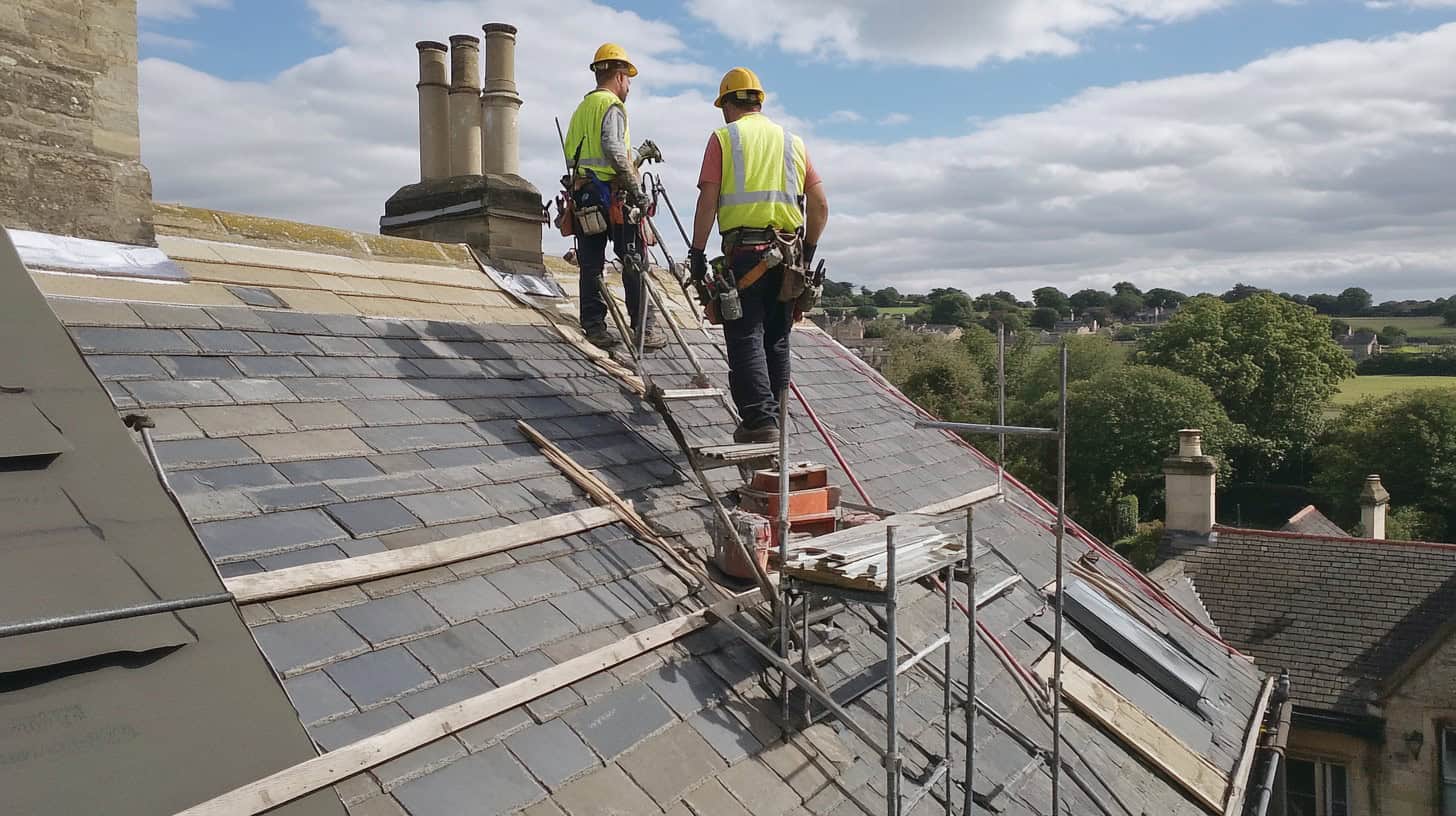
Specifically, the roofer arrives at the eaves after the brickwork is up, the wall plate is set, and the cavity insulation should be continuous to the top of the wall. If the cavity insulation is short below the wall plate, the roofer cannot see it from above and cannot easily check. The eaves get installed correctly to the roofing standard. The roof is signed off. The cold bridge remains.
This is why integrated trade delivery on new build housing reduces this specific defect type. When the same group is delivering both roofing and other interfaced packages, the interface inspections are joint rather than serial. The cavity insulation continuity is verified before the wall plate is fitted. The wall plate position is verified before the roofing crew arrives. The roof eaves are signed off against the full detail rather than just the roofing portion of it.
For developers procuring roofing as a standalone package, the practical defence against this defect type is to specify the interface detail at pre-start and require joint sign-off with the bricklayer or insulation installer at the eaves stage. Globe Roofing’s pre-start process includes this conversation by default on new build housing. The roofer attends a joint inspection at first eaves to verify the wall plate position and the underlying cavity insulation continuity.
There is also a Building Regulations dimension. The Part L thermal performance calculations submitted at design stage assume continuity of insulation at junctions. Where that continuity is not delivered on site, the building’s actual thermal performance falls short of its design performance. The developer is, in a strict sense, delivering a building that does not meet the calculations submitted. NHBC inspection regimes catch some of these defects but not all of them.
The visible defect rate in this area appears to be rising across the UK housing market as airtight construction makes the consequences of thermal bridges more visible. Buildings that would have produced minor mould in older, less airtight construction now produce significant mould in current airtight standards because the moisture has fewer routes to escape.
For QSs reviewing roofing tenders on schemes where this defect type matters, the question worth raising at pre-start is how the roofing contractor coordinates the eaves detail with the bricklayer and insulation installer. The answer separates a contractor who has thought about the interface from one who has not.
Talk to Globe Roofing To discuss cold bridging at the roofing and wall insulation interface on your scheme, contact Globe Roofing on 01223 890727 or email enquiries@theglobegroup.co.uk.