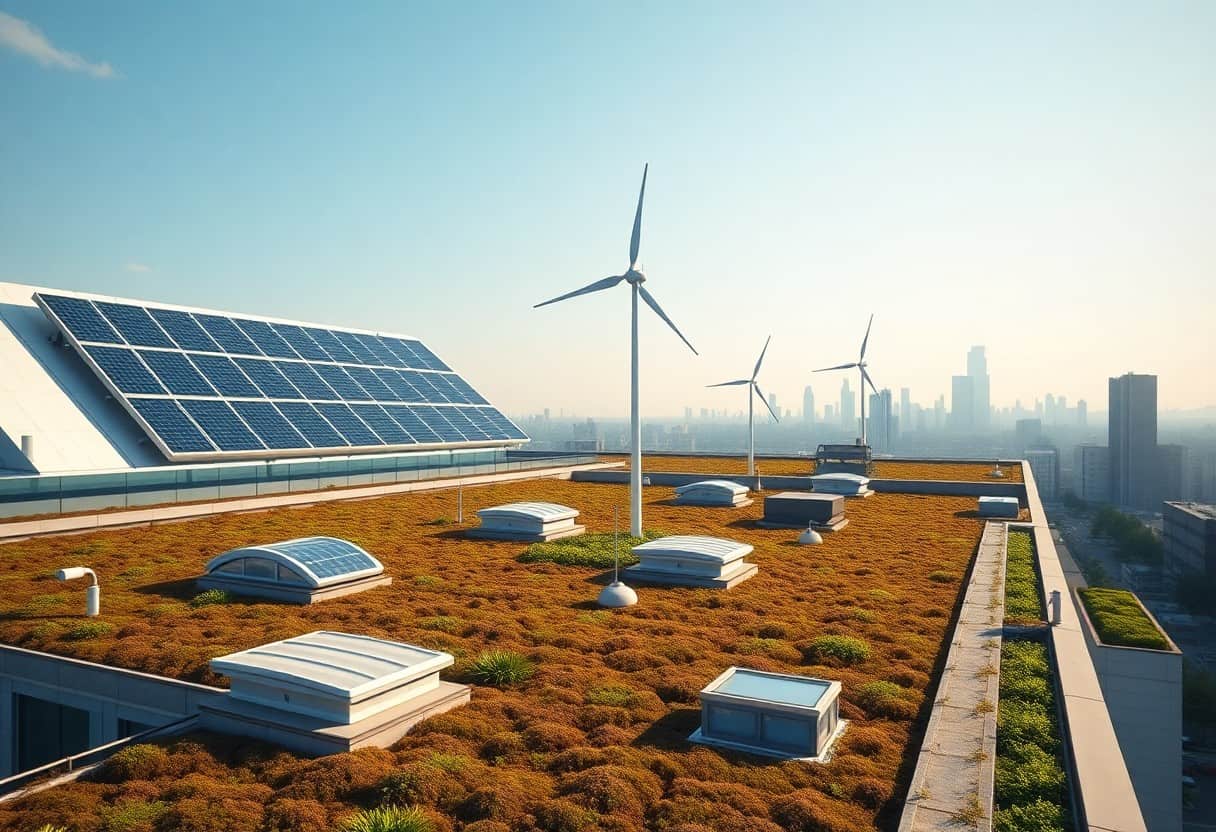
Roofing your commercial building with a flat system gives you clear advantages: it is cost-effective, offers easy access for maintenance and creates usable space for services or solar installations, while you must mitigate the danger of ponding water that can cause leaks through correct design and drainage.
Benefits of Flat Roofing
You gain multiple operational advantages with flat roofing: lower upfront cost, straightforward access for PV and HVAC, and efficient use of roof space for storage or social areas. Modern membranes such as EPDM, TPO and PVC offer service lives of roughly 20-30 years when maintained, while green or solar installations can cut energy bills and manage runoff. Pay close attention to drainage design to prevent ponding, which is the most common cause of premature failure.
Cost-Effectiveness
Flat roofs typically deliver measurable savings: installation can be about 10-25% cheaper than equivalent pitched systems due to lower material waste and faster labour. You also benefit from simpler access for installers and for adding PV-improving ROI; for example, rooftop solar on a commercial flat roof often achieves a payback in 6-10 years depending on incentives and energy use. Lower scaffold and scaffolding-hours further reduce initial project costs.
Easy Maintenance
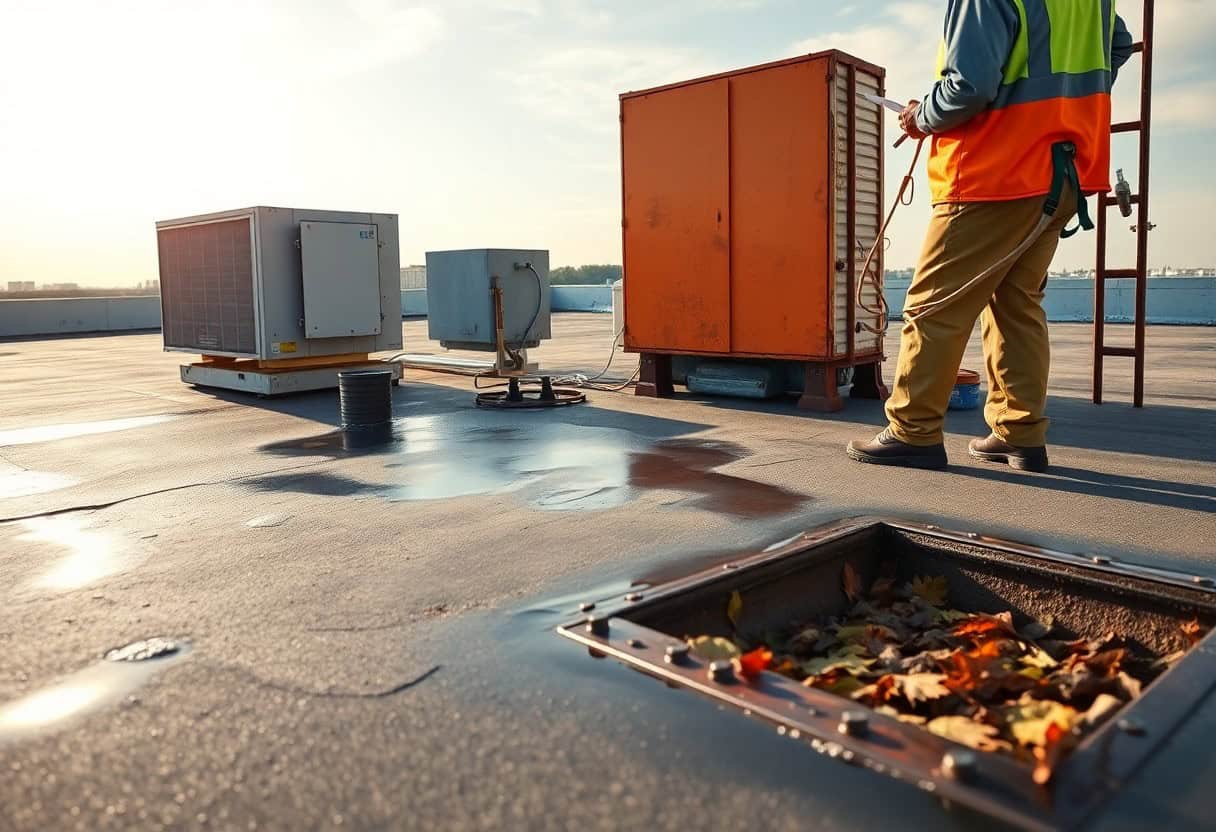
You’ll find routine upkeep far simpler on a flat roof: inspections are straightforward, roof plant is accessible without harness-intensive work, and scheduled cleaning of outlets prevents failures. Carry out checks at least every six months and after storms, and prioritise clearing debris from gutters and outlets to avoid ponding and membrane stress.
In practice, set a maintenance regime that includes biannual visual inspections, annual infrared surveys to detect concealed wet areas, and immediate clearing of leaf build-up and sediment from upstands and outlets. Use manufacturer-approved repairs-heat-welded seams on TPO/PVC or factory-applied patches for EPDM-to extend life. Facility managers commonly report that a planned maintenance budget of 1-3% of replacement value annually significantly reduces emergency repair costs and downtime, and keeps warranties valid.
Durability and Longevity
Many flat systems deliver long service lives when you maintain them: EPDM and TPO commonly last 20-30 years, PVC 25-30 years and built‑up roofs can reach up to 50 years with planned maintenance. You should factor in rooftop traffic, detailing quality and UV exposure; poor detailing is often the weak link. Routine checks and prompt repairs extend life, with regular inspections every 6-12 months reducing the risk of costly failures.
Weather Resistance
Flat roofs face ponding, wind uplift and UV degradation; you must design for all three. Specifying minimum falls of about 1:80-1:40 prevents ponding, while mechanical fixings and certified membranes resist wind uplift to defined uplift pressures under BS testing. Materials like EPDM tolerate −40°C to +120°C and PVC offers strong UV and chemical resistance, so match membrane properties to your climate and exposure.
Material Options
You can choose EPDM, TPO, PVC, GRP, built‑up felt or green roofs, each with distinct benefits: EPDM for flexibility, TPO for cost‑effective UV resistance, PVC for chemical resistance, GRP for seamless detailing and built‑up for heavy‑duty durability. Lifespans typically range 20-50 years depending on system and installation quality; your budget, access and required lifespan will dictate the best option.
EPDM repairs are straightforward with adhesive or taped seams, whereas TPO and PVC are heat‑welded for secure joints; GRP is applied in situ and cures to a seamless finish, demanding specialist installers. Built‑up felt relies on multiple layers and surfacing for robustness. You should plan to reseal flashings every 5-10 years and prioritise high‑quality detailing at penetrations to avoid the most common causes of failure.
Space Utilisation
Because flat roofs provide large, unobstructed surfaces, you can reclaim significant usable area for plant, PV arrays or amenity space; for example, a 1,000 m² roof can typically host 100-180 kW of solar PV depending on layout. You also gain easier routing for services and potential rental income from rooftop leases, maximising your asset value.
Rooftop Installations
On flat roofs you can mount HVAC plant, chillers, telecom masts and battery stores without sacrificing internal floorplate; however, plant weight and maintenance access must be assessed – rooftop units can exceed 1,000 kg each. You should coordinate with structural engineers, provide safe walkways and consider crane access and anchorage to avoid service interruptions.
Energy Efficiency
Flat roofs let you install continuous insulation above the deck, reducing thermal bridging and achieving target U‑values – aim for ≤0.18 W/m²K with 120-150 mm PIR or equivalent. You can also apply cool membranes or green roofs to lower surface temperatures and improve HVAC performance, cutting operational costs.
When you combine a warm roof with continuous insulation above the deck and a high‑albedo membrane or an extensive green roof, performance multiplies: typical retrofits with 120-150 mm PIR reduce heating demand by 20-40%, while cool membranes can cut peak roof surface temperatures by 10-20°C, lowering summertime cooling loads by up to 15%. Integrating PV on the same surface – roughly 100-180 kW per 1,000 m² depending on layout – lets you offset operational electricity and supply rooftop heat pumps, reducing distribution losses and annual energy bills.
Aesthetic Flexibility
Flat roofs give you exceptional aesthetic flexibility: you can install rooftop gardens, terraces and signage while hiding plant rooms behind parapets. A typical rule is about 1 kW of PV per 10 m², so a 1,000 m² roof can host roughly 100 kW of solar; conversely, green roofs add 60-500 kg/m² depending on type, so you must verify structure. See practical reasons in Why Do Commercial Buildings Have Flat Roofs?
Modern Designs
Contemporary flat roofs let you craft minimal, horizontal lines that work with curtain walls and steel façades; you can allocate 10-30% of the roof area to usable terraces, so a 1,000 m² roof often yields 100-300 m² for amenity space. You should conceal plant equipment behind parapets or screens to preserve clean sightlines and use single‑ply membranes for discreet profiles.
Color and Texture Choices
Colour and texture choices influence energy performance and brand identity: white or light coatings can reflect 65-85% solar radiation, lowering cooling loads, while dark membranes increase heat gain. You can combine gravel ballast, walkways and planted zones for contrast, but must balance aesthetics with slip resistance and maintenance schedules.
Single‑ply TPO and PVC often achieve solar reflectance index (SRI) values of 60-80, whereas EPDM is typically 10-30 unless coated; gravel ballast adds fire resistance and a tactile finish but can add 5-20 kg/m². Coatings usually need renewal every 10-15 years, so you should factor lifecycle costs into your design choices.
Installation Process
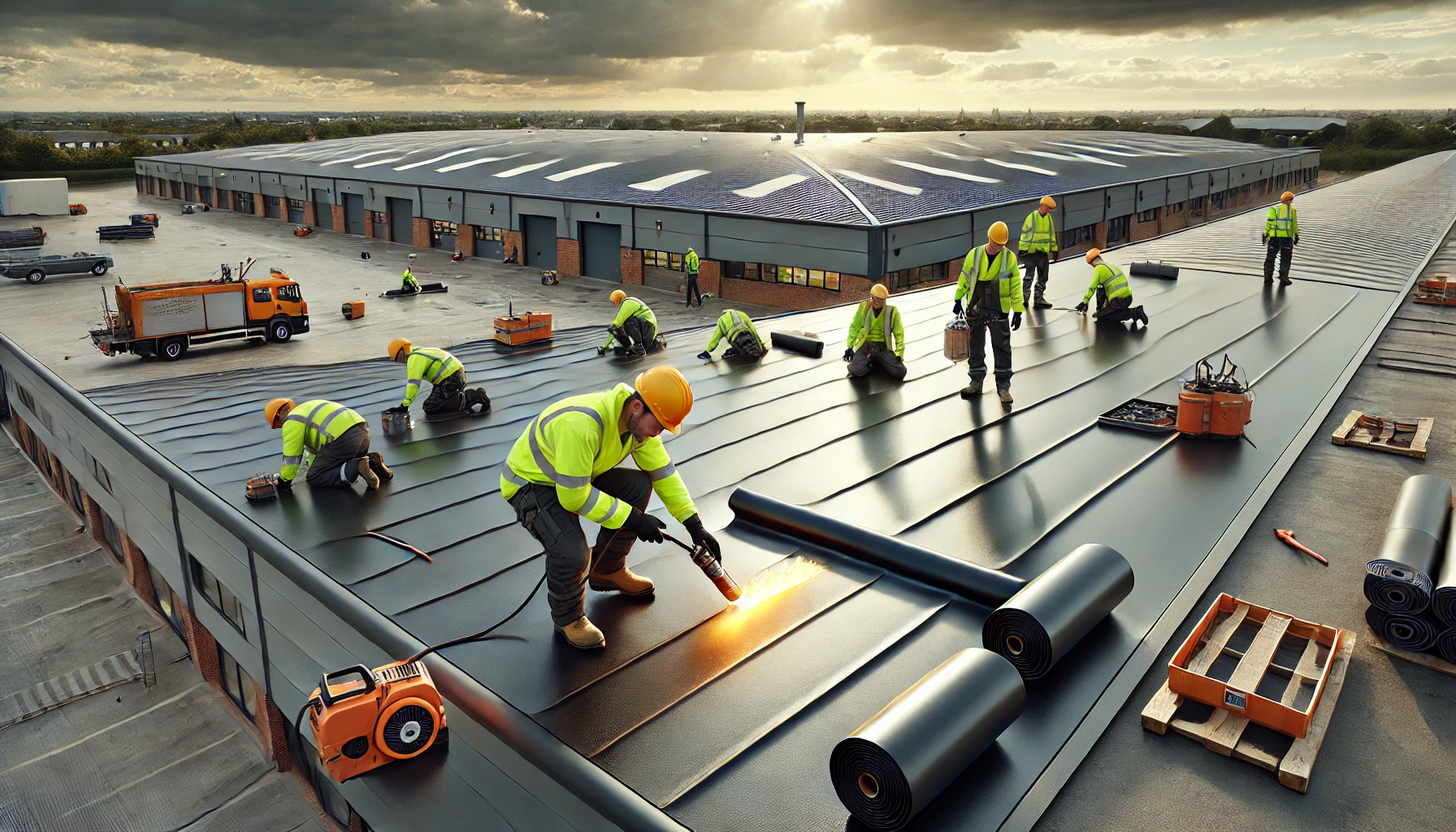
You start with a full roof survey and specification, then move to strip-out, substrate repair and installation of a vapour control layer before laying the chosen membrane (EPDM, TPO or PVC). Typical commercial jobs range from 200-1,200 m² and can be completed in 1-7 days depending on access and weather. Prioritise manufacturer-accredited installers and tight detailing, because poor seams or flashings lead to water ingress and long-term costs.
Professional Requirements
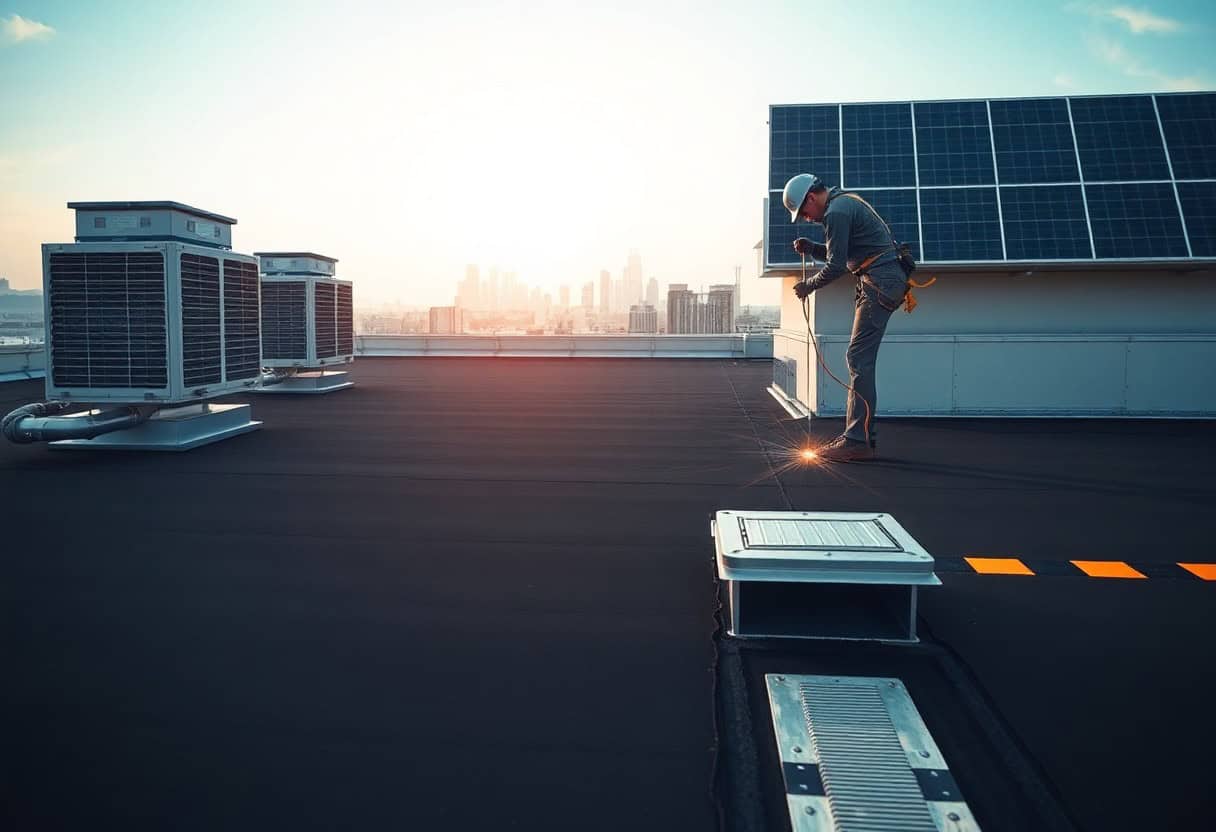
You should insist on teams with NVQ-level roofing qualifications, CSCS cards, working-at-height training and IPAF licences for powered access. Contractors must hold manufacturer accreditation to validate warranties and carry at least £5 million public liability cover plus employer’s liability. Expect trained supervisors for hot works, edge-protection competence and documented risk assessments before work commences.
Project Timeline
You can typically expect site survey and specification in 1-3 days, strip and substrate work in 1-5 days, membrane installation in 1-7 days and handover within 1-2 days; totals vary with roof size, complexity and weather.
For example, a 1,200 m² warehouse in Manchester was surveyed and specified in 2 days, stripped and prepared in 2 days, fitted with a torch-free PVC system in 1 day and handed over on day 6; allow an extra 2-4 days contingency for heavy rain or unforeseen substrate repairs.
Common Misconceptions
Water pooling gets labelled a fatal defect, yet you can design flat roofs with falls, scuppers and sump drains to disperse runoff; modern membranes such as EPDM, TPO and PVC now deliver 20-30 year lifespans with proper detailing. You should also know that flat roofs often improve usable rooftop space for HVAC, solar and terraces, offering measurable energy and operational savings, while perceived fragility is frequently a maintenance-planning issue rather than an inherent flaw.
Flat Roofing vs. Sloped Roofing
Flat systems typically cost less to install and allow easier access for servicing plant, making them a practical choice for commercial sites; you can expect installation times to be up to 30% faster than complex pitched structures on comparable footprints. Thermal performance can be superior when insulation is continuous above the deck, and you gain valuable rooftop real estate for PV, green roofs or plant rooms that sloped options rarely provide.
Maintenance Myths
It’s a myth that flat roofs require constant repairs; you should plan inspections every six months and after major storms, which keeps issues small and manageable. Routine tasks like clearing gutters, checking flashings and ensuring drains are clear typically prevent leaks and extend membrane life, so proactive maintenance reduces lifecycle costs and unplanned downtime.
For more detail, focus inspections on drainage outlets, membrane seams and penetrations, as 70-80% of commercial roof failures originate at these points. Use a standard checklist-photograph issues, record measurements and programme repairs within 30 days to avoid escalation. If you employ a service contract, stipulate biannual surveys plus post-weather checks and keep documentation to support warranties and insurance claims.
Final Words
With these considerations you can appreciate why flat roofing is ideal for commercial buildings: it lowers installation and maintenance costs, provides easy access for HVAC and solar panels, maximises usable roof space for services or greenery, and delivers durable, long-lasting protection when properly specified and maintained, giving you predictable lifecycle costs and efficient energy performance.
FAQ
Q: Why is flat roofing often the ideal choice for commercial buildings?
A: Flat roofing offers cost-effective construction and efficient use of roof area. Installation typically requires fewer materials and less labour than pitched roofs, lowering initial expenditure and shortening programme times. The level surface provides practical space for plant equipment, HVAC units, photovoltaic arrays, rooftop gardens or amenity terraces, helping to optimise building services and potential revenue streams. Access for inspection and maintenance is generally easier and less disruptive than on steep pitches.
Q: How durable and weather-resistant are modern flat-roof systems?
A: When specified and installed correctly, contemporary flat-roof systems are highly durable and weather-resistant. Common coverings such as EPDM, TPO, PVC and modern bituminous membranes can deliver service lives in the order of 20-40 years depending on material choice, detailing and exposure, and manufacturers often provide warranties. Proper detailing of seams, flashings and drainage falls prevents ponding and water ingress; many systems include UV-stable surfaces and reinforced layers to withstand foot traffic and weathering.
Q: What design, installation and maintenance considerations ensure long-term performance of a flat roof?
A: Good design and installation must address fall for drainage, thermal insulation, vapour control and safe access. Adequate falls or crickets to outlets prevent ponding, while high-performance insulation and a suitable vapour control layer reduce heat loss and condensation risk. Regular inspections, clearing debris from outlets, checking flashings and seals and prompt repairs extend service life. Compliance with building regulations and fire safety standards, plus engaging experienced contractors and securing appropriate warranties, minimises whole-life cost and operational risk.