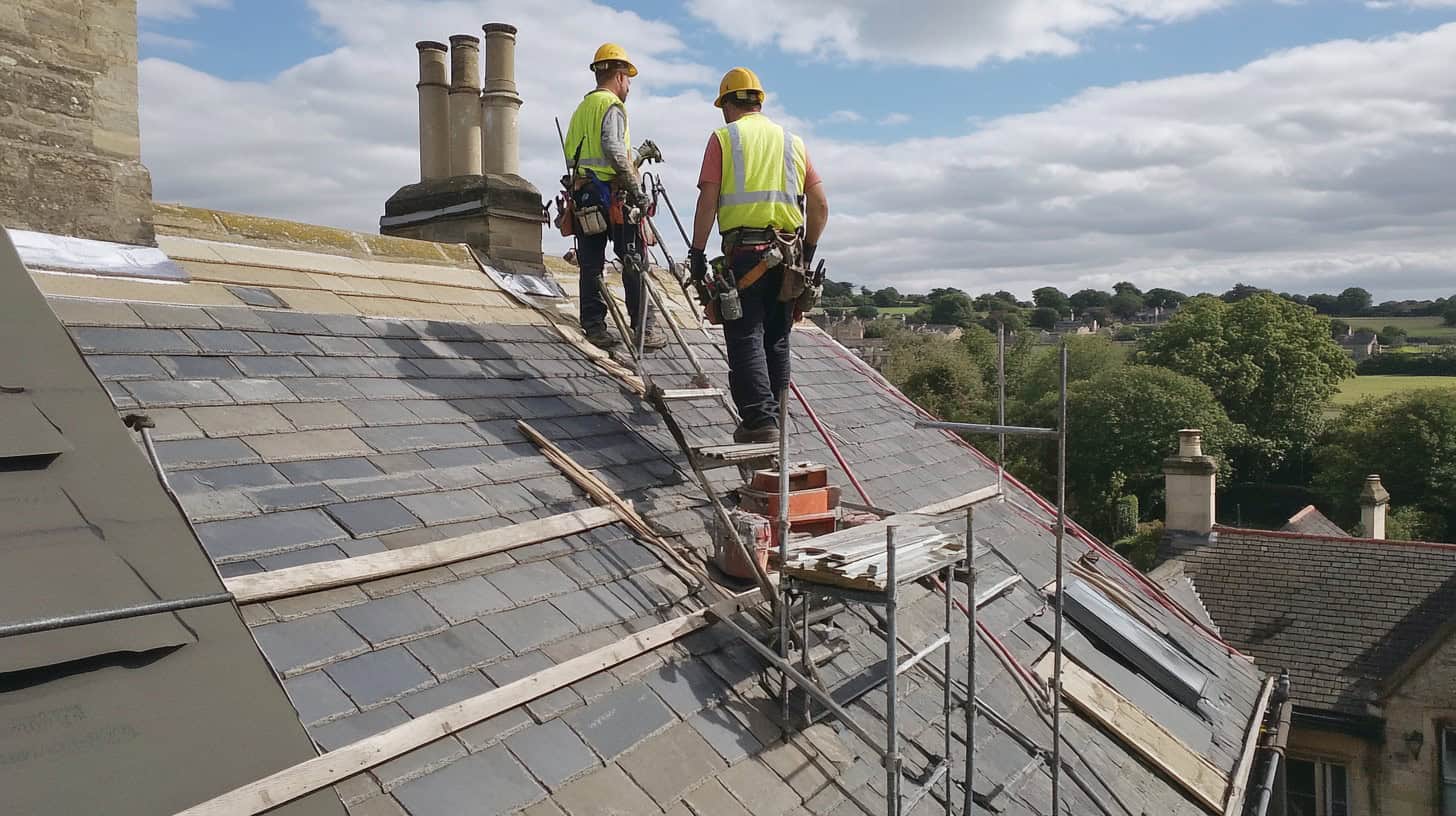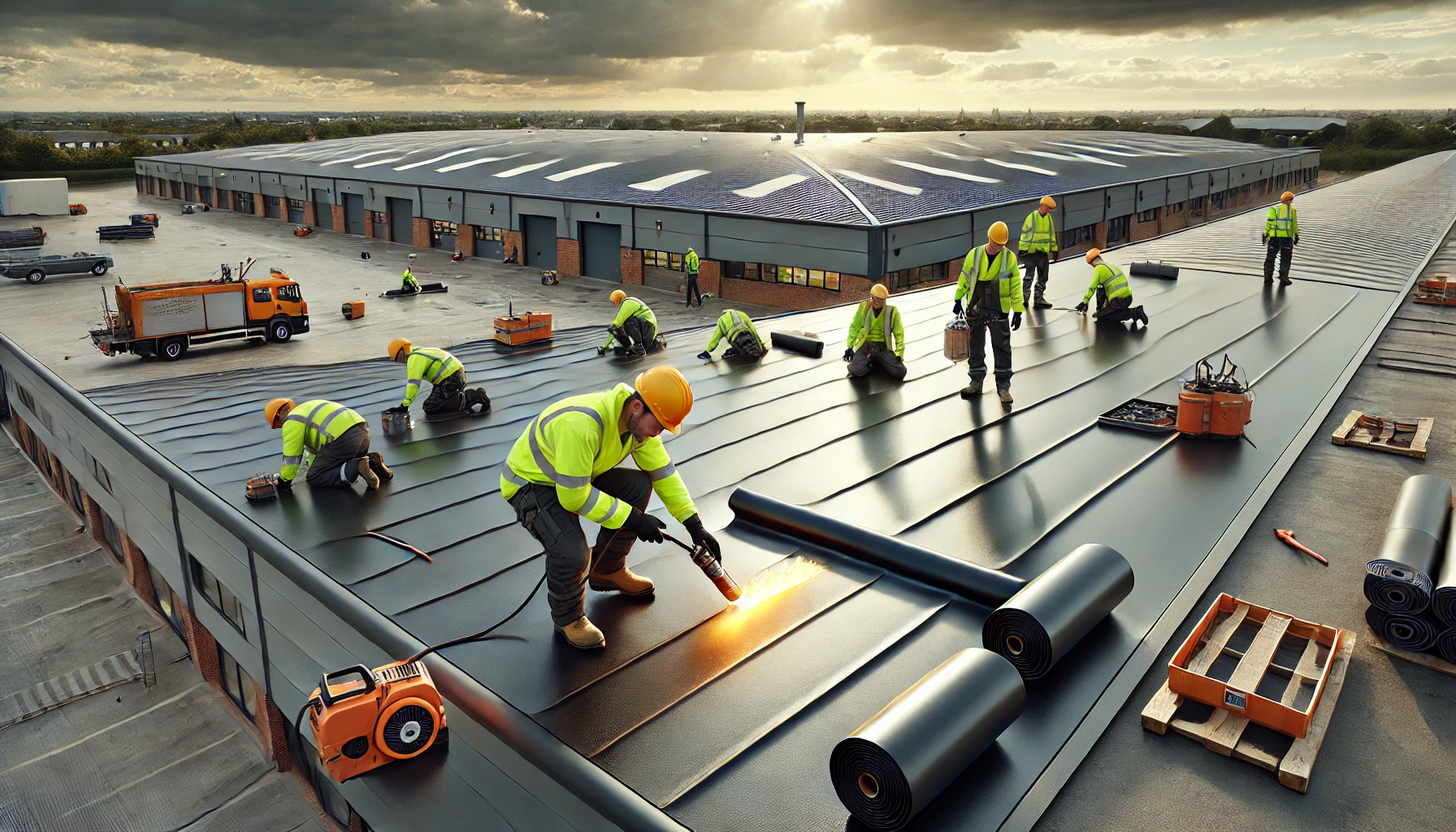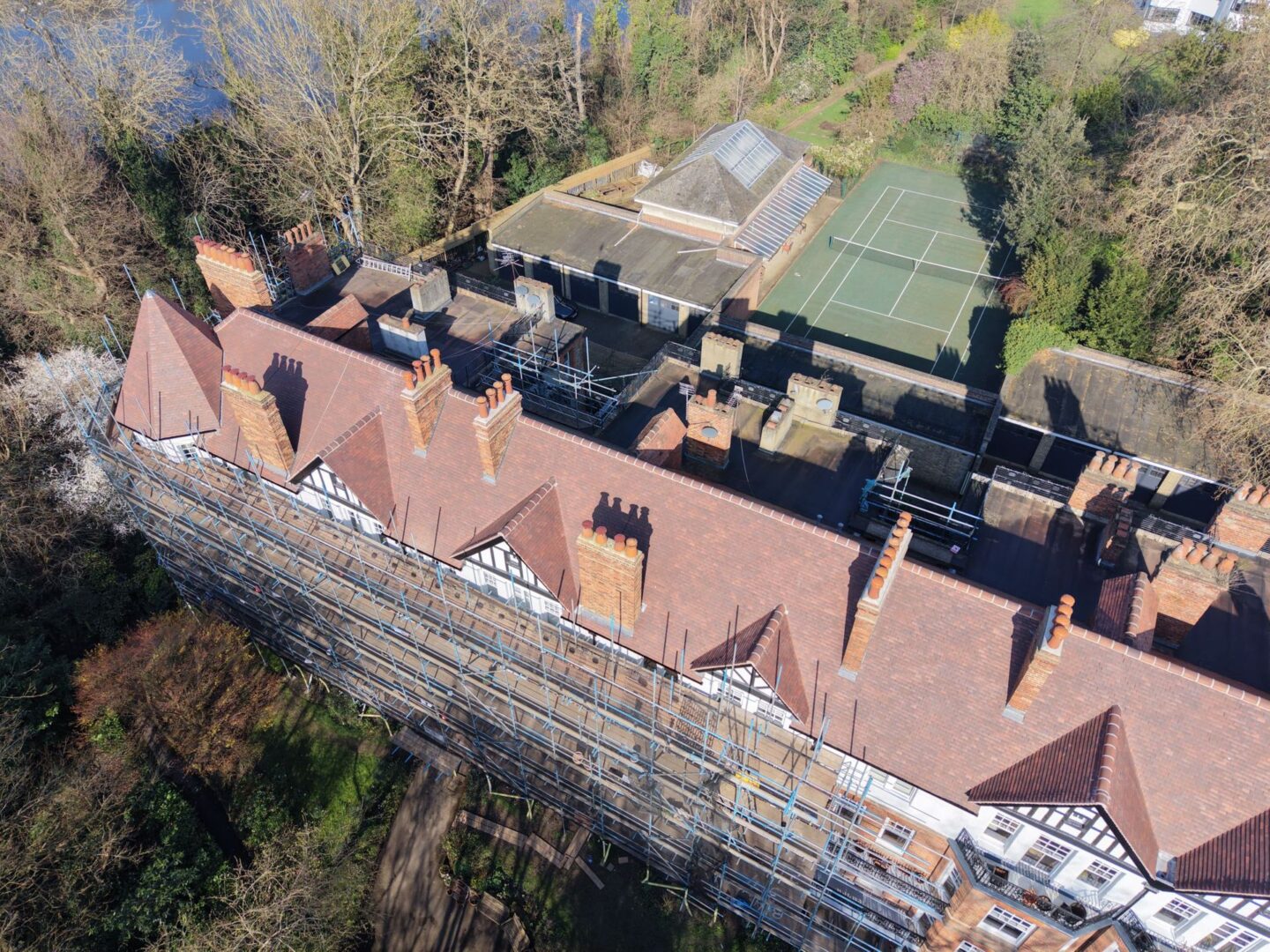
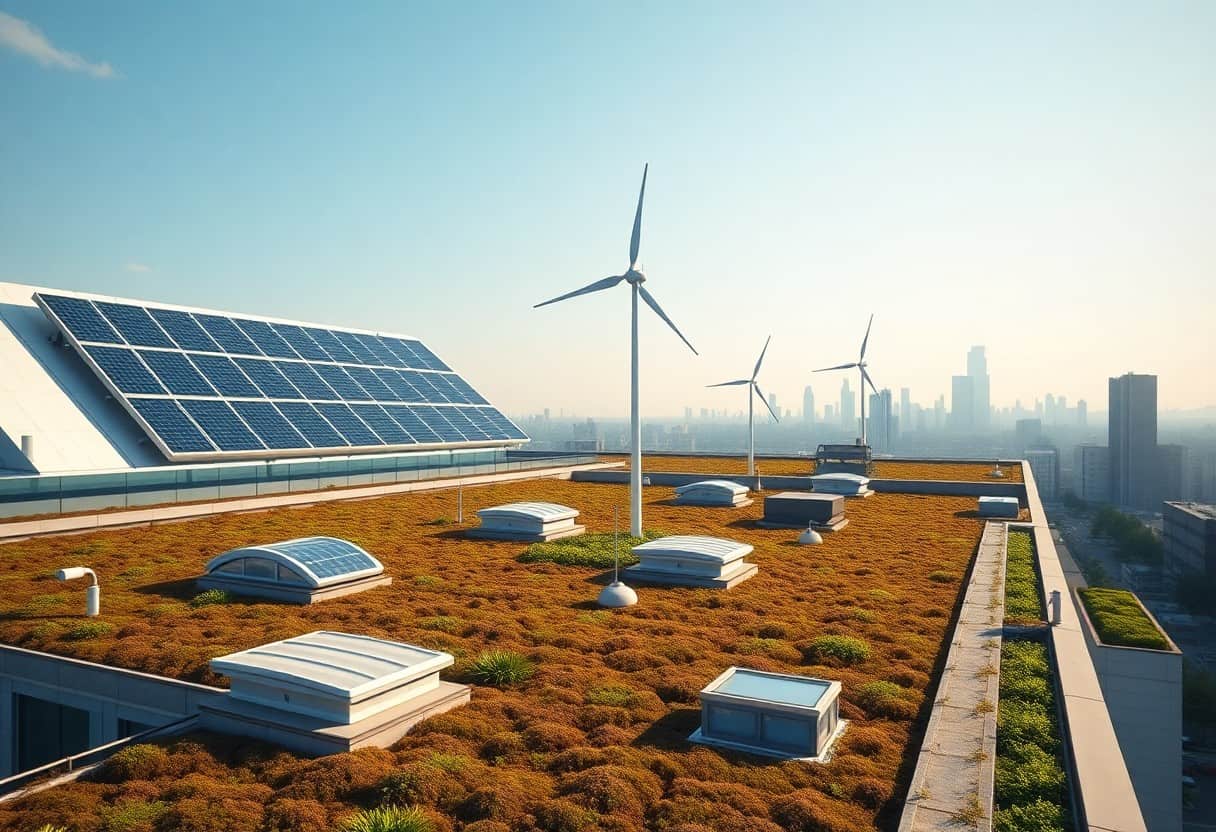
With sustainable roofing choices, you can significantly cut operational costs and carbon output while enhancing building performance; consider green roofs and solar PV for energy generation, high‑albedo cool roofs and reflective coatings to reduce heat gain, and recycled or long‑life membranes to extend service life, but assess installation and maintenance risks such as water ingress and increased fire risk with some combustible materials to protect your asset and occupants.
The Importance of Sustainable Roofing in Commercial Buildings
When you specify sustainable roofing, you directly lower operational emissions and operational costs; for example, cool roofs can cut summer cooling demand by up to 15-20% and green roofs can retain 60-80% of rainfall during summer storms, reducing drainage loads. Practical pilots show combined measures often reduce whole-building energy use by 10-30%, protecting assets while improving regulatory compliance and corporate ESG reporting.
Environmental Benefits
You reduce urban heat island effects and improve biodiversity by choosing vegetated systems; extensive green roofs support pollinators and can retain over half of incident rainfall, lowering peak runoff. Reflective membranes drop surface temperatures by 10-25°C, cutting cooling loads, while rooftop PV directly displaces grid electricity, helping you meet net-zero targets and demonstrate measurable carbon reductions.
Economic Advantages
You benefit from lower energy bills, deferred roof replacements and enhanced asset value; solar PV paybacks in commercial settings often fall in the 5-10 year range, and combined solutions can yield 10-30% energy savings, improving operating margins and freeing capital for other projects.
Delving deeper, you should factor maintenance and lifecycle gains: green roofs and PV installations shield membranes, commonly extending service life by 10-20 years, and stormwater retention can reduce drainage upgrade costs. Financial models routinely show internal rates of return that justify upfront spend when you include utility savings, roof-life extension and potential incentives.
Types of Sustainable Roofing Materials
You can choose Green Roofs, Cool Roofing, Metal Roofing, Solar PV and Recycled Materials to balance lifespan, thermal performance and maintenance; for example, metal roofs often last 40-70 years while green roofs can retain 50-80% of rainfall. Practical comparisons and retrofit examples appear in Top Eco-Friendly Roofing Options For Commercial Buildings. Knowing you must match material weight, budget and climate when specifying systems.
- Green Roofs – living vegetation for stormwater management and insulation
- Cool Roofing – high solar reflectance coatings and membranes to lower cooling loads
- Metal Roofing – recyclable, long-lived and fire-resistant options
- Solar PV – integrated photovoltaic arrays for on-site generation
- Recycled Materials – rubber, glass or composite tiles reducing embodied carbon
| Green Roofs | Retain stormwater (50-80%), improve biodiversity, extend membrane life |
| Cool Roofing | High reflectance (up to ~0.85), reduces surface temps by 10-15°C and cooling demand |
| Metal Roofing | 40-70 year lifespan, 100% recyclable, low maintenance, good for solar mounting |
| Solar PV | Generates on-site electricity, payback often 5-12 years depending on incentives |
| Recycled Materials | Lower embodied carbon, examples: rubber tiles, recycled glass shingles, composite panels |
Green Roofs
You benefit from green roofs’ stormwater retention and thermal buffering: studies show retained runoff between 50-80%, while intensive systems can support recreation and biodiversity; typical substrate depths range from 80mm (extensive) to 300mm+ (intensive), and you should account for added live load and irrigation needs when planning installations.
Cool Roofing Solutions
You achieve lower peak indoor temperatures with cool roofs: reflective membranes and white coatings can cut roof surface temperatures by 10-15°C and reduce summer cooling energy by around 10-15%, making them cost-effective on south-facing, flat commercial roofs in warm climates.
Further detail: you should specify materials with high solar reflectance (ideally ≥0.65) and strong thermal emittance; common choices include white elastomeric coatings, reflective single-ply membranes and acrylic or silicone topcoats. Maintenance is straightforward-periodic cleaning preserves albedo-and case studies show municipal buildings often recoup installation costs within 5-8 years through energy savings and lower HVAC peak loads. Be aware that surface soiling can reduce performance, so a maintenance plan is important for long-term gains.
Energy Efficiency and Insulation
Upgrading roof insulation and selecting high-performance membranes significantly tightens your building’s thermal envelope; increasing insulation to reach a roof U-value near 0.18 W/m²K (from around 0.5 W/m²K) can lower heating demand by roughly 20-30%. PIR boards (λ≈0.022 W/mK) and high-density mineral wool offer strong thermal resistance per millimetre, while cool coatings and green roofs reduce summer peak loads. You should pair insulation with vapour control layers and airtight detailing to protect long-term thermal performance.
Impact on Energy Consumption
Field studies and retrofits typically show reflective or vegetated roofs cut cooling energy by 10-25%, and upgraded insulation trims heating loads by about 20-30%. You will see the greatest gains in warehouses and big-box retail because roof area-to-volume ratios are high; for example, combining insulation and cool coatings on a medium distribution centre often reduces annual HVAC energy use by roughly a quarter. Dynamic modelling (EnergyPlus/IES) helps quantify these benefits precisely.
Long-term Savings
Investing in roof efficiency yields clear financial returns: payback periods for insulation plus reflective membranes commonly fall between 3-8 years, dependent on local energy costs and duty cycles. You gain lower operating expenses, reduced peak demand charges and improved asset value via higher BREEAM/LEED scores. Selecting durable membranes with warranties of 20-30 years also decreases lifecycle maintenance spend and risk.
Lifecycle costing shows combining measures-high-performance insulation, cool/vegetated roofs and rooftop PV-accelerates returns; for instance, integrating 100 kWp of PV with improved insulation on a medium office can push payback below 6 years and cut operational carbon by about 25-35%. You should run NPV and whole-life models and factor in expected roof replacement cycles, warranties and maintenance schedules to capture the full financial and carbon benefits.
Regulations and Incentives for Sustainable Roofing
Government Policies
The Energy Performance of Buildings Directive required new buildings to be nearly zero‑energy by 2020, and if you operate in the UK the net‑zero by 2050 commitment plus Building Regulations Part L directly tighten insulation, U‑values and commissioning standards for roofs. Local planning policies and BREEAM targets often impose additional requirements for green roofs, solar integration and surface runoff, so your design must meet both national minima and local planning conditions to secure permits and valuable sustainability credits.
Financial Incentives for Businesses
You can reduce upfront costs via schemes such as the Smart Export Guarantee (SEG) – introduced in January 2020 – which pays for exported generation (suppliers typically offer around 1-6 p/kWh), and through tax reliefs and capital allowances that lower taxable profit. Note that the non‑domestic Renewable Heat Incentive closed to new applicants in April 2021, so you should prioritise current grants, PPAs, ESCO models and green loans when planning roof investments.
For practical financing, you should explore Power Purchase Agreements to avoid capex, ESCO arrangements that guarantee performance, and low‑interest green loans or local grants to shorten payback. As an example, a 200 kW rooftop PV array in the UK can produce roughly ~170,000 kWh/year, which may cover a large warehouse’s electricity and deliver payback typically within 5-12 years depending on tariffs, export rates and your load profile; check supplier SEG offers and local authority grants to optimise your return.
Case Studies of Successful Sustainable Roof Installations
You can assess real-world outcomes: a mix of sustainable roofing approaches has delivered measurable energy, water and lifecycle gains, from green roofs lowering cooling loads to solar PV systems offsetting grid use. Several projects report 20-60% reductions in peak cooling demand and payback periods under 8 years.
- 1. London logistics hub – 8,500 m² cool roof retrofit (2019): reduced peak roof temperature by 18°C, cut annual cooling energy by 28%, capital cost £210,000, estimated ROI 6.2 years.
- 2. Berlin office complex – rooftop solar PV 120 kW (2020): produced ~140 MWh/year, avoided 36 tonnes CO₂/year, installation cost £130,000, simple payback ~7 years.
- 3. Amsterdam tech campus – 3,200 m² extensive green roof (2018): stormwater retention 35 m³/event, peak runoff reduced by 75%, biodiversity index up 42%, additional roof load managed with structural reinforcement +£45,000.
- 4. Madrid retail centre – combined PV + cool roof (2021): peak demand cut 22%, PV supplied 65% daytime consumption, lifecycle maintenance down 30%, first-year savings £48,000.
- 5. Toronto medical facility – modular living roof 1,100 m² (2017): improved insulation value by 0.18 W/m²K, staff comfort complaints down 60%, extended membrane life projected +12 years.
- 6. Sydney distribution centre – rainwater harvesting + green roof (2016): captured 1,200 m³/year, reduced mains water bills by 42%, combined project cost £95,000, IRR ~9%.
Notable Examples
You can study standout wins: the Berlin 120 kW solar PV array demonstrates high urban yield (≈1,167 kWh/kW/year) while the Amsterdam green roof shows how stormwater mitigation and biodiversity gains pair with modest structural upgrades to deliver multi-decade benefits.
Lessons Learned
You should prioritise integrated design: combining PV, insulation and green layers often delivers the best energy and water returns, but requires early structural assessment to avoid overloading and ensure appropriate drainage to prevent ponding.
You must also budget for lifecycle costs: several projects reported that modest additional upfront spend on high-quality membranes and root barriers reduced replacement frequency, yielding net savings and lowering operational risk from leaks and maintenance interruptions.
Maintenance and Longevity of Sustainable Roofs
Best Practices
You should schedule inspections at least twice a year and after severe storms, clear drains and gutters every 3 months, and remove debris promptly to prevent ponding. For green roofs, monitor irrigation, check root barriers and replace vegetation plugs annually; for PV arrays, plan cleaning 2-4 times a year and inverter checks every 10-15 years. Also ensure flashings and sealants are resealed every 5-10 years to avoid hidden leaks that lead to substrate failure.
Expected Lifespan
Typical lifespans vary: extensive green roofs often reach 25-50 years with proper upkeep, metal roofs can last 40-70 years, while single‑ply membranes like TPO or EPDM commonly perform for 20-30 years; PV modules are warranted for ~25-30 years though inverters usually need replacement after 10-15 years. Be aware that persistent pooling water can halve membrane life.
Service intervals, climate and installation quality drive longevity: in temperate settings where you perform biannual inspections and address issues within weeks, membranes regularly hit their upper lifespans and green roofs can exceed 30 years. Conversely, high UV, coastal salt spray or heavy footfall typically reduce expected life by 10-30% unless you choose protective coatings, stainless fixings and higher‑grade membranes; consider a tiered maintenance plan (monthly, quarterly, annual tasks) and track interventions to validate warranty claims.
To wrap up
Now you can favour green roofs, cool membranes, solar-integrated systems and recycled-material coverings to cut energy use, manage stormwater and prolong service life; by evaluating lifecycle costs, maintenance demands and regulatory compliance you will optimise building performance, reduce operational expenditure and demonstrate measurable sustainability leadership.
FAQ
Q: What are the most viable sustainable roofing systems for modern commercial buildings?
A: The most viable systems combine energy generation, thermal performance and ecological benefit. Green roofs (extensive and intensive) reduce surface temperatures, manage stormwater and support biodiversity; extensive systems are lightweight (typically 60-150 kg/m²) and low-maintenance, while intensive schemes support larger planting and roof amenities but require greater structural capacity. Cool roofs use high-reflectance membranes or coatings to lower solar heat gain and reduce cooling loads; they are cost-effective for flat or low-pitched roofs and can be applied as liquid-applied membranes or single-ply sheets. Photovoltaic solutions include rooftop PV arrays and building-integrated photovoltaics (BIPV); PV delivers predictable energy yield and pairs well with improved insulation. Metal roofs with high recycled content and long service lives, and membranes with recycled polymers, reduce embodied carbon. Hybrid approaches (green roof over PV, blue-green systems for stormwater retention) often deliver the best whole-life outcomes. Selection should consider life-cycle carbon, U-values, structural load limits in kg/m², drainage, fire performance, warranty terms and compatibility with maintenance regimes.
Q: How should a commercial building be assessed and prepared for a sustainable roof retrofit?
A: Begin with a full roof condition survey and structural appraisal to establish current dead and live loads, deflection limits and existing waterproofing condition. Check drainage capacity, falls and outlet locations, and inspect for trapped moisture or hidden defects. Conduct thermal analysis to set target U-values and identify where insulation upgrades or vapour control layers are required. For PV, assess roof area, orientation, shading and wind uplift; decide between ballast or penetrative fixings and confirm roof access and fall protection. For green or blue roofs verify load-bearing capacity for saturated substrate and retained water (allow for ponding depth). Plan phased works to maintain watertightness, select compatible interfaces between systems (membrane, insulation, root barriers) and obtain structural engineer sign-off. Factor in statutory consents, fire strategy, maintenance access, safety systems and whole-life costing early in design to avoid costly retrofits during installation.
Q: What are the long-term performance expectations and maintenance needs for sustainable roofing options?
A: Performance and maintenance vary by system. Green roofs can extend waterproofing life and typically require initial establishment irrigation, seasonal inspections, removal of invasive species and occasional substrate topping; expected service lives for the waterproof membrane are commonly 25-40 years, while the vegetative layer can persist with periodic upkeep. Cool roof coatings may need reapplication every 5-15 years depending on product and exposure. PV systems commonly carry module warranties of 25-30 years and inverters 10-15 years; expect performance degradation of around 0.5-1% per year and schedule inverter replacement within the first two decades. Metal roofing and high-quality single-ply membranes can last 30-70 years with routine inspections and prompt repair of penetrations or flashings. Inspections should be undertaken at least annually and after major weather events; maintenance tasks include clearing gutters and outlets, checking drainage, repairing flashings, monitoring vegetation on green roofs, and testing electrical performance of PV. Monitor energy and water savings and update maintenance plans based on observed performance to optimise whole-life cost and environmental benefit.